tricity-flux.xyz explores Ho Chi Minh City, Vietnam, as a site where change is the only constant, translating urban flux into a volumetric, behavioral systems. Through algorithmic reconfiguration representational imagery is transformed from fixed state into dynamic particle fields that occupy space, respond to forces and evolve over time and therefore shift the image from object to process, from archive to simulation. Positioned as permanent and temporary migrants, the artists work within multiple in-betweens: between cultures, between stillness and motion, between picture and computation, between has-been and could-be. The artists triangulate the city’s continuous change across technical, spatial, and temporal layers.
Patrick Hartono’s inquiry investigates relations between sound, space, and traffic. He focuses on the city as a spatial system shaped by congestion and continuous movement. Traffic jams are examined not as disruptions, but as moments where spatial awareness becomes heightened through proximity, negotiation, and adaptation. Within dense conditions, drivers and pedestrians navigate space through informal cues and collective intuition rather than fixed rules. These interactions form a dynamic and shifting structure, where chaos and order coexist. Hartono investigates how spatial intelligence emerges from everyday movement, treating congestion as a behavioral condition that reveals how the city organizes itself in real time.
Bin Youn’s inquiry starts with scanning found flowers on the surface of her own body whereby the hand scanner is not a machine but a tool in a rite of passage: the light bar moves across the glass like a slow breath passing through, the illumination penetrates petals, stem and human skin: the fallen flower, already dead, receives light one more time and resurrects pixel by pixel. What began physically, the software continues digitally. The name Touchdesigner is not metaphor but method: the same gesture that lifted flowers from sidewalks now manipulates nodes, parameters and real-time transformations. The creature that emerges is twice-touched: once by palm, once by code.
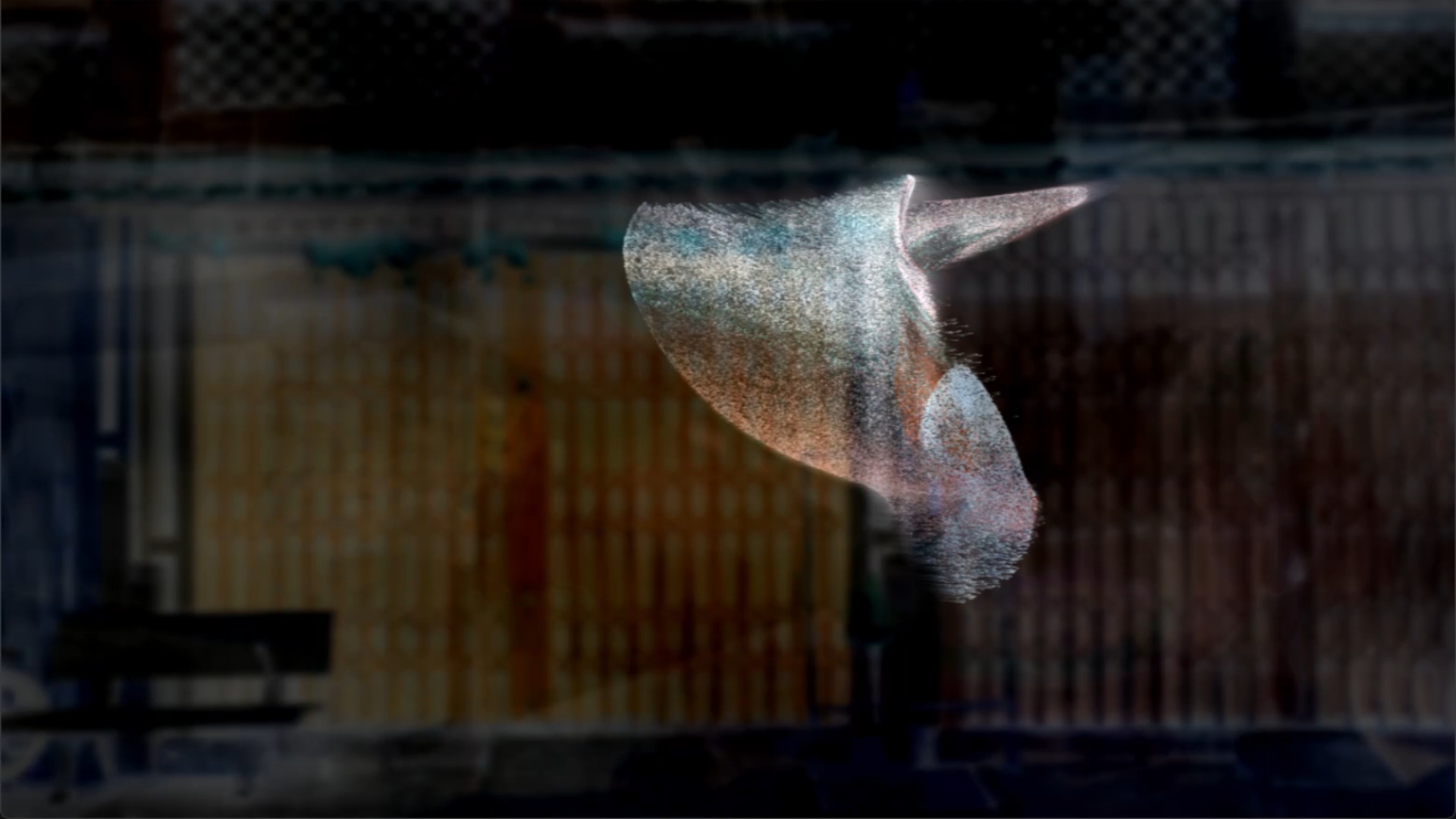
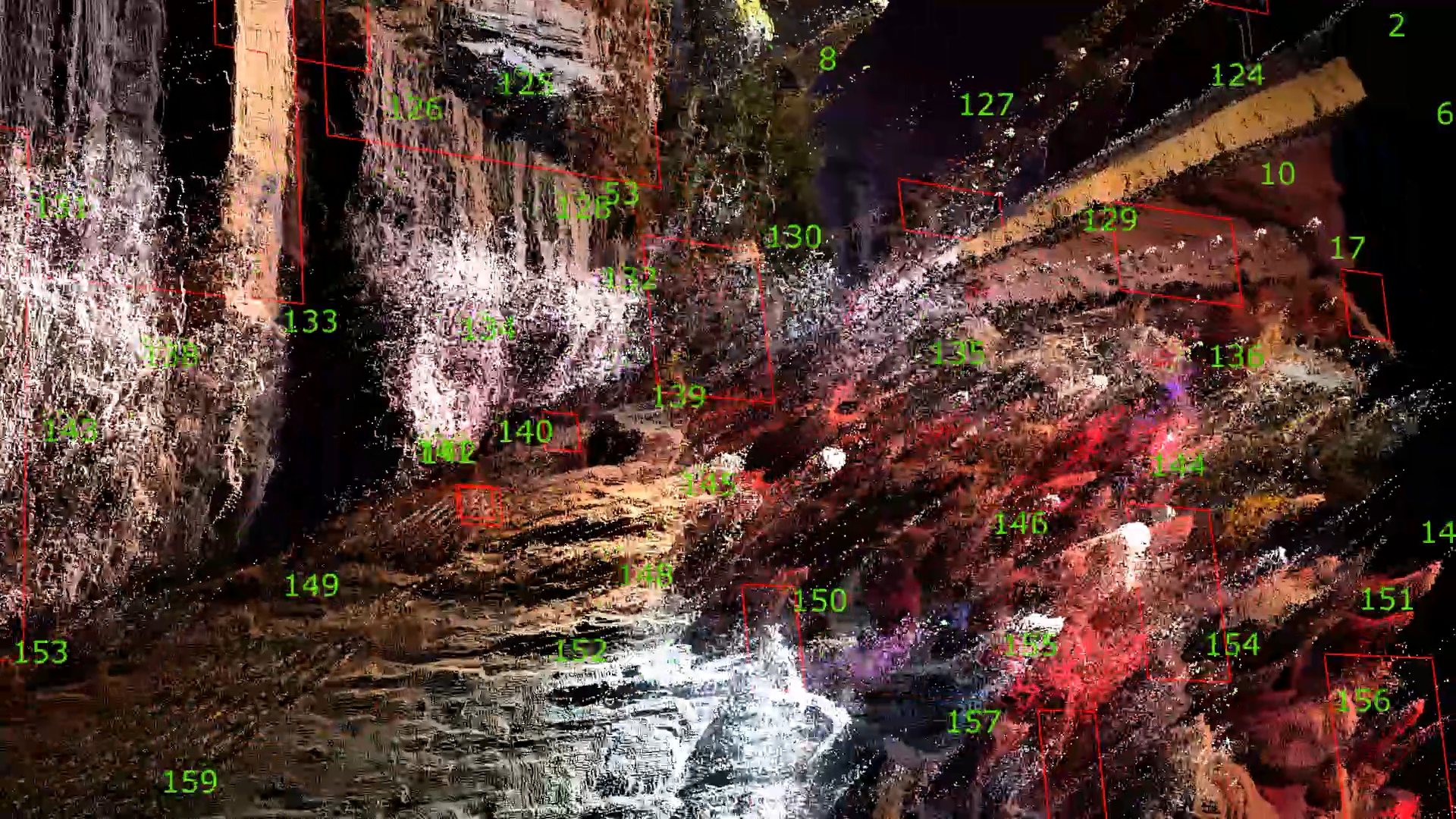
Christian Berg’s inquiry starts with the six-digit code of Vietnamese lottery tickets that lead to process-driven traverses across the city’s vast topographies in which each ticket number corresponds with a GPS location. Taking inspiration from the vernacular and cosmological gambling practice of số đề the project uses traditional photographs as source materials to create through pixel-to-point translation elusive creatures made of real time 3D particles. The overlay of these visual artefacts with the source material makes a connection between the physical sites of inquiry and the spiritual world visible.
Each artist’s source material is chosen not for aesthetic qualities, but for thematic, affective, or contextual resonance: whether linked to identity, site, space, numerology, or gesture. With the understanding that it will later be dissolved, redistributed, or structurally reconfigured through simulation.
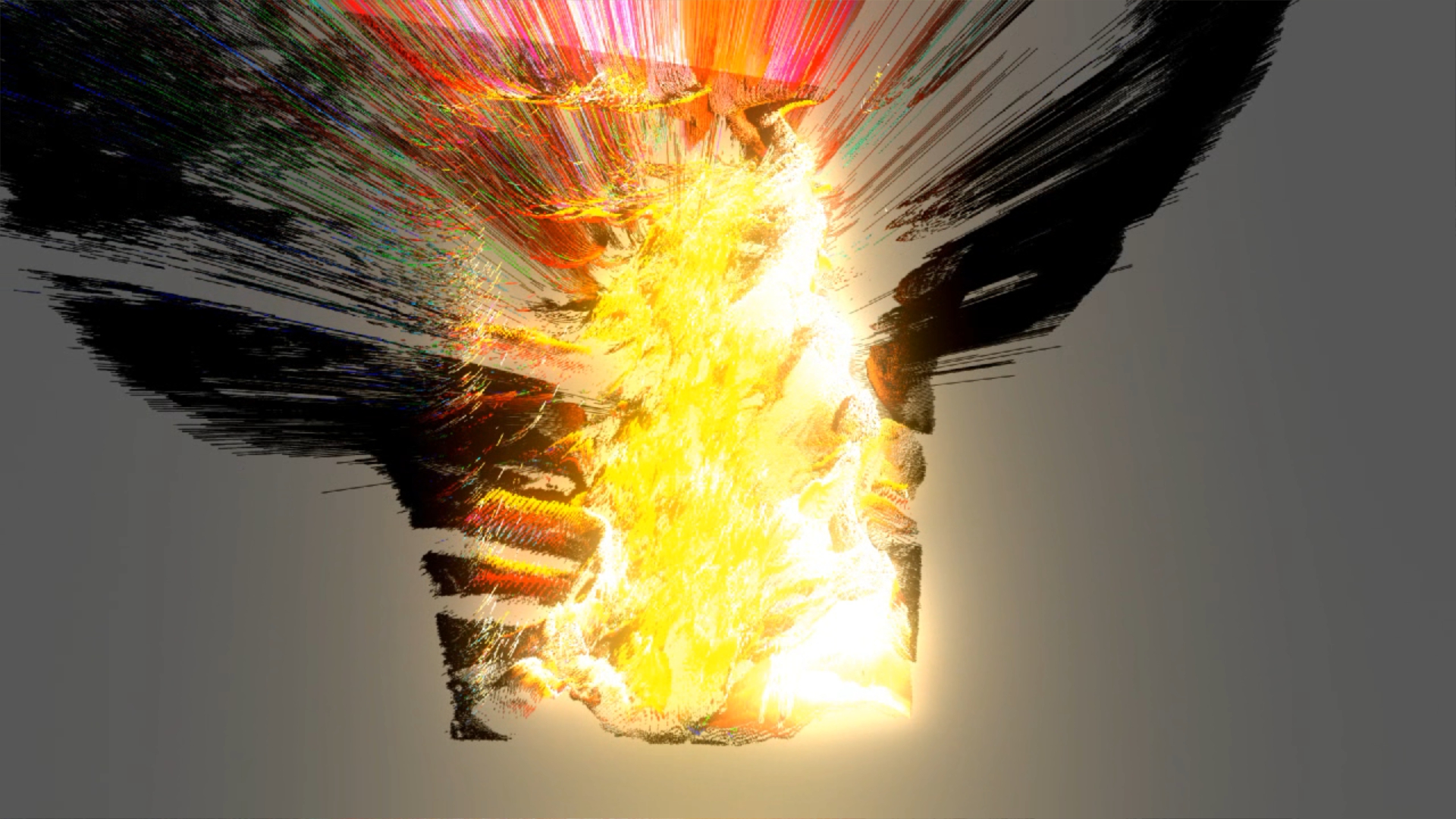
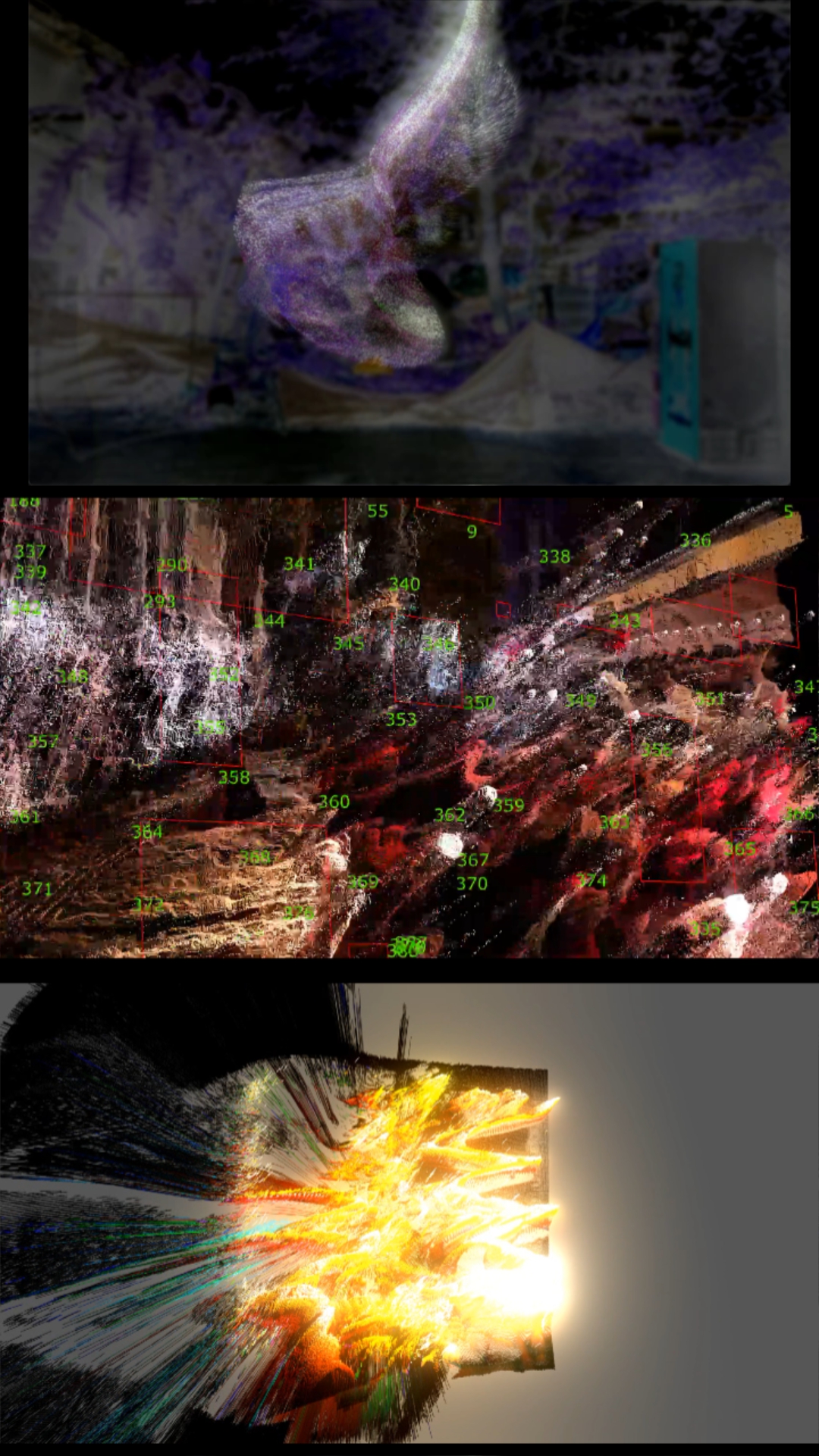
Beginning from different narrative foundations, each inquiry activates a specific translation process: moving from pixel data to particle systems, from visual information to volumetric geometry, and from geometry to behavioral simulation. Through this multi-artefact structure, narrative, computation and material behavior, the artists co-produce the image which represents their collective state of in-betweenness. In-between cultures, in-between languages, and in-between technologies.